

When you walk into a medical office, your primary focus is naturally on your health concerns and the expertise of your care team. However, behind every successful consultation lies a rigorous framework of clinic facility hygiene protocols designed to protect vulnerable populations from healthcare-associated infections. In the United States, maintaining these rigorous benchmarks requires a delicate balance of federal compliance, advanced environmental engineering, and daily operational diligence by both clinical and administrative personnel.
Understanding these rigorous standards offers invaluable insight into a facility’s overall commitment to a robust clinic patient safety record. In this overview, you will explore the essential regulatory mandates, hands-on sterilization workflows, and advanced engineering controls that healthcare providers implement to cultivate a truly secure healing environment.
1. Regulatory Compliance and Essential Clinic Facility Hygiene Protocols
1.1 Navigating U.S. Healthcare Standards for Patient Safety
1.1.1 Interpreting OSHA Bloodborne Pathogen and Hazard Communication Mandates
Maintaining a safe clinical environment starts with rigorous adherence to the Occupational Safety and Health Administration mandates. The Bloodborne Pathogen Standard requires clinics to implement strict exposure control plans, mandate the use of engineering controls, and provide hepatitis B vaccinations to at-risk personnel. Alongside this, the Hazard Communication Standard ensures that staff understand the chemical risks associated with powerful sterilizing agents through clear labeling and Safety Data Sheets.
1.1.2 Meeting CMS Conditions for Coverage and Joint Commission Safety Goals
For outpatient facilities and multi-specialty centers, alignment with Centers for Medicare & Medicaid Services Conditions for Coverage is non-negotiable. Facilities must routinely evaluate their operational workflows against National Patient Safety Goals set by accrediting bodies like The Joint Commission. These frameworks emphasize minimizing healthcare-associated infections through standardized tracking and transparent public reporting, which directly reinforces a stellar clinic patient safety record.
1.1.3 Integrating CDC Infection Control Guidelines into Daily Clinic Operations
The Centers for Disease Control and Prevention provide the foundational science-backed recommendations that govern everyday clinical practices. Translating these guidelines into daily workflows means establishing precise protocols for hand hygiene, respiratory etiquette, and environmental cleaning. Staff members at all levels must view these measures not as administrative hurdles, but as core elements of patient-centered medical excellence.
1.2 Standardizing Hand Hygiene and Personal Protective Equipment Workflows
1.2.1 Implementing the Five Moments of Hand Hygiene for Clinical Personnel
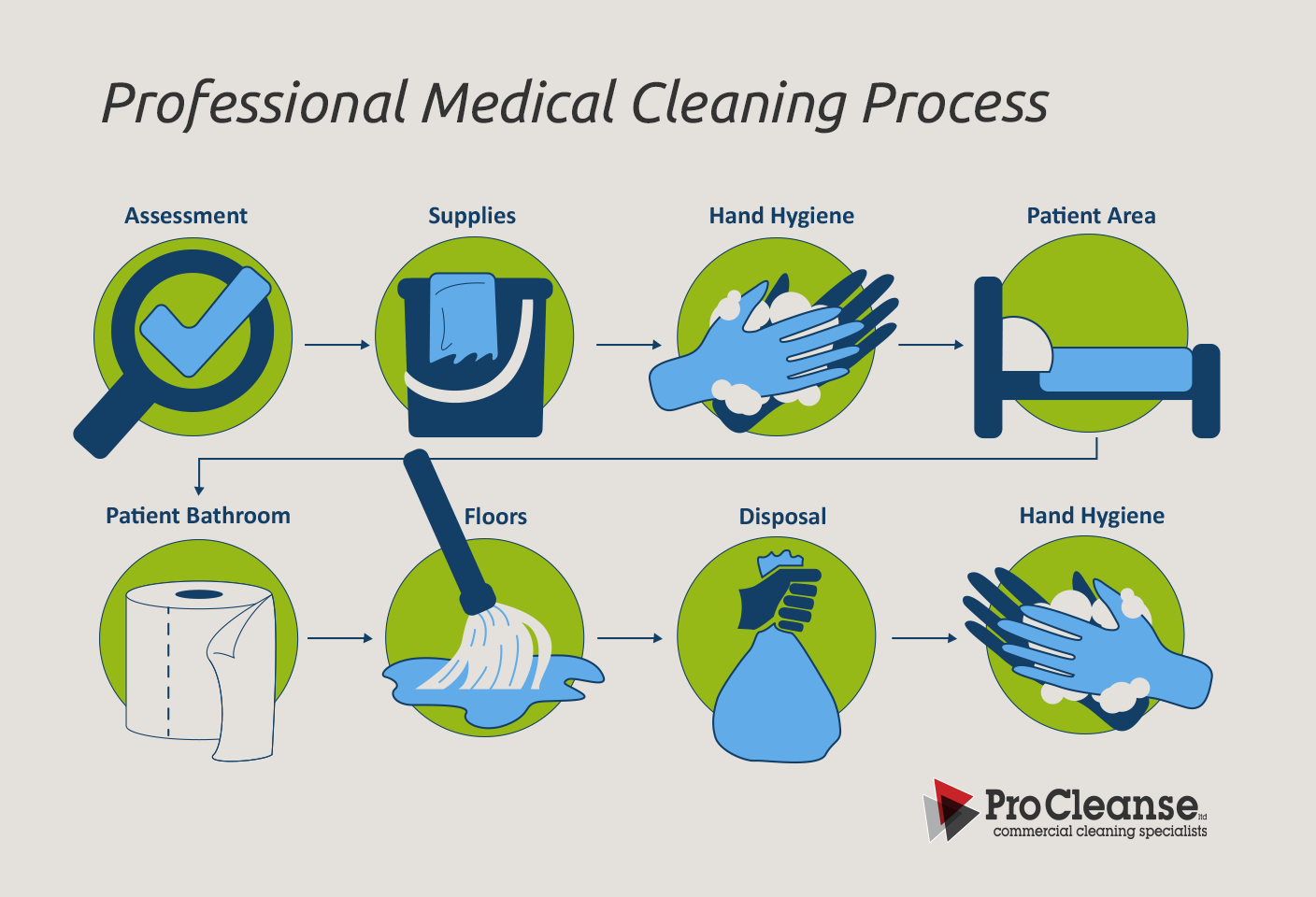
Adhering to the World Health Organization’s “Five Moments for Hand Hygiene” framework protects both patients and healthcare workers from cross-contamination. Clinicians must perform hand hygiene before touching a patient, before clean or aseptic procedures, after body fluid exposure risk, after touching a patient, and after touching patient surroundings. Consistency in these actions serves as the single most effective defense against pathogen transmission.
1.2.2 Establishing Standardized Donning and Doffing Procedures for PPE
Proper utilization of personal protective equipment requires meticulous training. Facilities must establish step-by-step sequences for both putting on and safely removing items such as gloves, gowns, masks, and eye protection. Correct doffing is especially critical to prevent self-contamination, ensuring that infectious agents trapped on the outer surfaces of gear do not transfer to skin or clothing.
1.2.3 Utilizing Friction Scrubbing Techniques and Compliance Auditing Tools
Merely applying sanitizer or soap is insufficient without proper mechanical action. Friction scrubbing requires rigorous palm-to-palm, interdigital, and fingernail cleaning for the recommended duration. To maintain high compliance, clinics increasingly rely on digital auditing tools and direct peer observation to monitor technique and provide constructive, real-time feedback.
1.3 Environmental Disinfection and Medical Equipment Sterilization
1.3.1 Selecting EPA-Registered Disinfectants Based on Efficacy and Contact Times
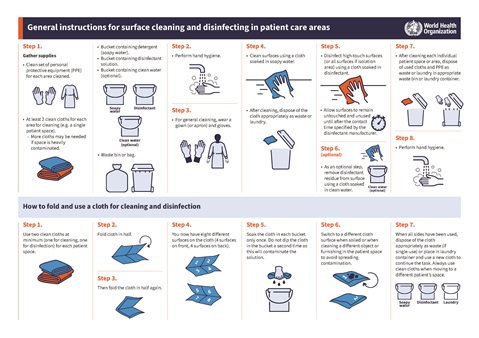
Environmental surface disinfection relies on choosing products approved by the Environmental Protection Agency that target specific pathogens, including spores and multi-drug resistant organisms. Staff must pay close attention to wet contact times—the duration a surface must remain visibly moist to achieve the intended microbial kill rate. Misjudging contact times can leave behind resilient pathogens despite visible cleaning efforts.
1.3.2 Managing High-Touch Surface Sanitation in Waiting and Examination Rooms
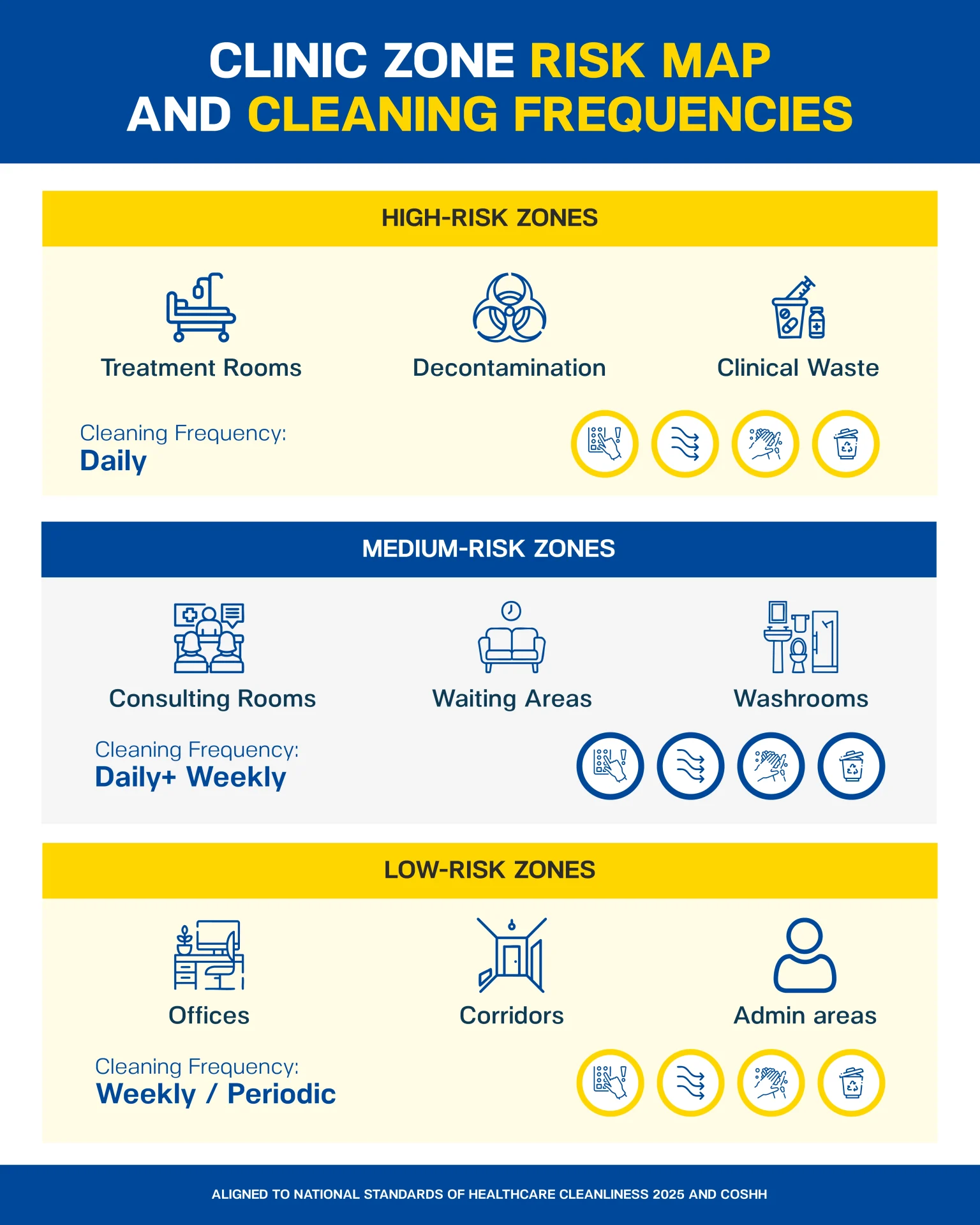
High-touch zones such as doorknobs, check-in kiosks, armrests, and examination tables require frequent, scheduled disinfection throughout the day. Facilities often combine rigorous manual wiping schedules with specialized architectural choices to minimize bacterial buildup in high-traffic areas, ensuring a secure environment from the moment patients arrive.
1.3.3 Adhering to Manufacturer Instructions for Use (IFU) for Device Reprocessing
Reusable medical instruments, from diagnostic scopes to surgical tools, demand precise reprocessing cycles that strictly follow the manufacturer instructions for use. Central processing teams must meticulously verify cleaning, disinfection, and sterilization parameters to prevent device-related infections, safeguarding patient health during every examination and procedure.
2. Advanced Facility Infrastructure and Human Capital Safety Systems
2.1 Engineering Controls for Infection Prevention and Workflow Management
Modern medical facilities rely heavily on physical infrastructure to block pathogen transmission. Implementing rigorous patient cohorting and isolation strategies for infectious presentations ensures that suspected airborne or contact-transmissible cases are separated from vulnerable populations the moment they enter the facility. Optimizing HVAC systems and negative pressure configurations in designated evaluation rooms further prevents contaminated air from circulating into waiting areas or corridors, drastically bolstering your clinic patient safety record.
Complementing these architectural safeguards, facilities increasingly leverage UV-C disinfection and intelligent sanitization technologies. Automated ultraviolet light systems and electrostatic sprayers eliminate human error during terminal room cleaning, providing an additional layer of protection against persistent hospital-acquired pathogens.
2.2 Comprehensive Medical Waste Management and Sharps Safety Protocols
Safely handling medical byproducts is just as critical as surface disinfection. Ensuring accurate segregation of regulated medical waste and biohazards at the point of generation protects both environmental health and municipal sanitation workers. Strict adherence to color-coded bin systems prevents infectious materials from mixing with standard municipal trash.
Executing sharps disposal safety is paramount to prevent occupational needlestick injuries among clinical personnel. Staff must immediately deposit used needles, scalpel blades, and lancets into rigid, puncture-resistant containers located within arm’s reach of every procedure table. Furthermore, maintaining meticulous chain of custody documentation for external waste contractors ensures full accountability from the moment hazardous materials leave the facility until final incineration.
2.3 Cultivating a Culture of Safety Through Staff Competency and Training
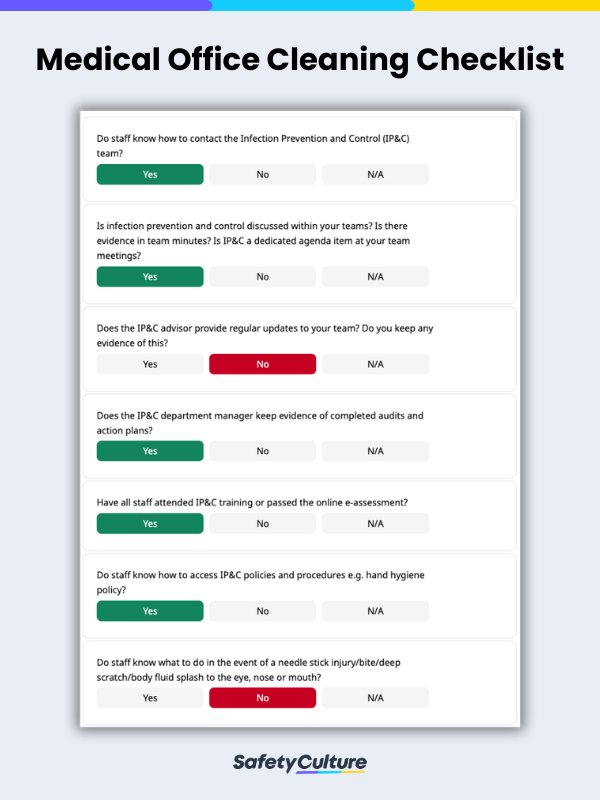
Even the most advanced infrastructure fails without a vigilant and well-trained workforce. Developing continuous education programs for clinical and administrative staff bridges the gap between theoretical guidelines and daily execution. When team members understand the “why” behind every procedure, compliance naturally improves across the board.
Conducting peer observation audits and periodic infection control competencies allows clinics to track adherence in real time, often tying these insights directly into staff professionalism feedback surveys to foster continuous departmental improvement. Ultimately, sustaining high standards requires cultivating a non-punitive reporting system for near-misses and safety breaches, encouraging employees to voice concerns openly so leadership can proactively resolve vulnerabilities before an adverse event occurs.
Maintaining rigorous clinic facility hygiene protocols is far more than a regulatory box-checking exercise—it is the bedrock of a reliable clinic patient safety record and a cornerstone of community trust. Throughout this guide, we have explored how adherence to federal mandates, meticulous environmental disinfection, advanced engineering controls, and a supportive safety culture intersect to protect both patients and healthcare personnel. When medical facilities treat sanitation as a continuous, evolving science rather than a reactive chore, they dramatically reduce healthcare-associated infections and foster a safer, more transparent healing environment.
Ultimately, clinical excellence relies just as much on behind-the-scenes sterilization workflows and active compliance tracking as it does on direct patient care. As healthcare standards continue to advance, evaluating how well a facility communicates these cleaning practices can offer profound insights into its overall quality. To learn more about how medical practices evaluate their care standards and prioritize your well-being, explore our guide on medical excellence benchmarks to make more informed choices about your healthcare providers.
One Reply to “Clinic Facility Hygiene Protocols & Patient Safety Standards”