
Pork is the most commonly consumed meat worldwide (1), but many people still aren’t sure how to classify it. Is it red meat? Or does its light color mean it belongs with poultry in the white meat category?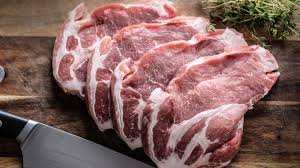
The answer depends on whether you’re looking at pork from a scientific or culinary perspective. Let’s break it down.
What’s the Difference Between Red and White Meat?
The key difference between red and white meat lies in the amount of myoglobin, a protein found in muscle tissue.
Myoglobin stores oxygen in muscles and gives meat its color. When exposed to oxygen, it turns a deep red color (2, 3).
-
Red meats have higher levels of myoglobin, which makes them darker.
-
White meats, like chicken and turkey, have less myoglobin, resulting in lighter-colored flesh.
But color isn’t only about myoglobin. Other factors also affect how meat looks, such as:
-
The animal’s species, age, diet, and activity level
-
The type of muscle used (active muscles = darker meat)
-
Processing and packaging methods (2, 3)
For reference, typical raw meat colors include:
-
Beef – cherry red
-
Lamb – dark red
-
Pork – grayish-pink
-
Veal – pale pink
-
Poultry – varies from bluish-white to yellow (3)
Scientifically Speaking: Pork Is Red Meat
According to the U.S. Department of Agriculture (USDA) and the scientific community, pork is classified as red meat (1).
Here’s why:
-
Myoglobin content – Pork contains more myoglobin than poultry or fish, even though it’s not as dark as beef or lamb.
-
Livestock classification – Pigs, like cows and sheep, are considered livestock. All livestock meat falls under the red meat category.
So, despite its lighter appearance—especially when cooked—pork is scientifically red meat.
In the Kitchen: Pork Is Often Treated as White Meat
In culinary terms, “white meat” usually refers to meat that is light in color before and after cooking. Based on this definition, many chefs and consumers consider pork a white meat—especially lean cuts like pork loin or tenderloin.
This idea was further popularized in the 1980s through a marketing campaign by the National Pork Board, which branded pork as:
“The Other White Meat” (4)
The campaign aimed to promote pork as a lean, healthier alternative to beef—and it worked. Public perception began shifting, especially regarding low-fat pork options.
However, this label was created for marketing purposes and doesn’t reflect pork’s scientific classification.
The Takeaway: Is Pork Red or White Meat?
Here’s the bottom line:
-
Pork is red meat from a scientific and nutritional standpoint. It contains more myoglobin than white meat and is sourced from livestock.
-
Culinarily, pork is often prepared and consumed like white meat, especially in leaner cuts.
-
Some cuts of pork have a nutritional profile similar to chicken, which led to the popular phrase:
“Pork. The Other White Meat.”
So while pork may look and cook like white meat, it remains—officially and biologically—red meat.