

Navigating the complexities of modern healthcare delivery requires U.S. health systems to balance fiscal responsibility with uncompromised clinical excellence. Effective hospital operational efficiency benchmarking has consequently evolved from a routine administrative exercise into a critical strategic imperative for institutional survival and growth. As executive leadership teams face persistent workforce shortages, rising supply costs, and shifting reimbursement models, understanding how internal workflows stack up against regional and national standards is more vital than ever.
Measuring performance goes far beyond tracking simple ledger expenses or patient volume; it requires a holistic view that safeguards clinical treatment outcomes while streamlining everyday throughput. Modern analytics initiatives must evaluate everything from emergency department wait times to the medical technology integration status of core departments to pinpoint hidden bottlenecks. In this guide, healthcare administrators, clinical directors, and operations managers will learn how to establish robust performance baselines, interpret key performance indicators, and implement data-driven frameworks that elevate both institutional productivity and patient care quality.
1. Strategic Frameworks for Hospital Operational Efficiency Benchmarking
1.1 Defining Core Objectives and Data Infrastructure
1.1.1 Evolution of Performance Tracking in Modern U.S. Healthcare Systems
Performance tracking in U.S. hospitals has evolved from rudimentary paper-based census counts into sophisticated, multi-dimensional analytics engines. Historically, hospital leadership relied on retrospective monthly reports that offered little opportunity for real-time course correction. Today, rigorous hospital operational efficiency benchmarking demands dynamic data architectures capable of synthesizing clinical, financial, and administrative streams simultaneously to support value-based care delivery.
1.1.2 Leveraging EHR and HIS Data for Real-Time Operational Visibility
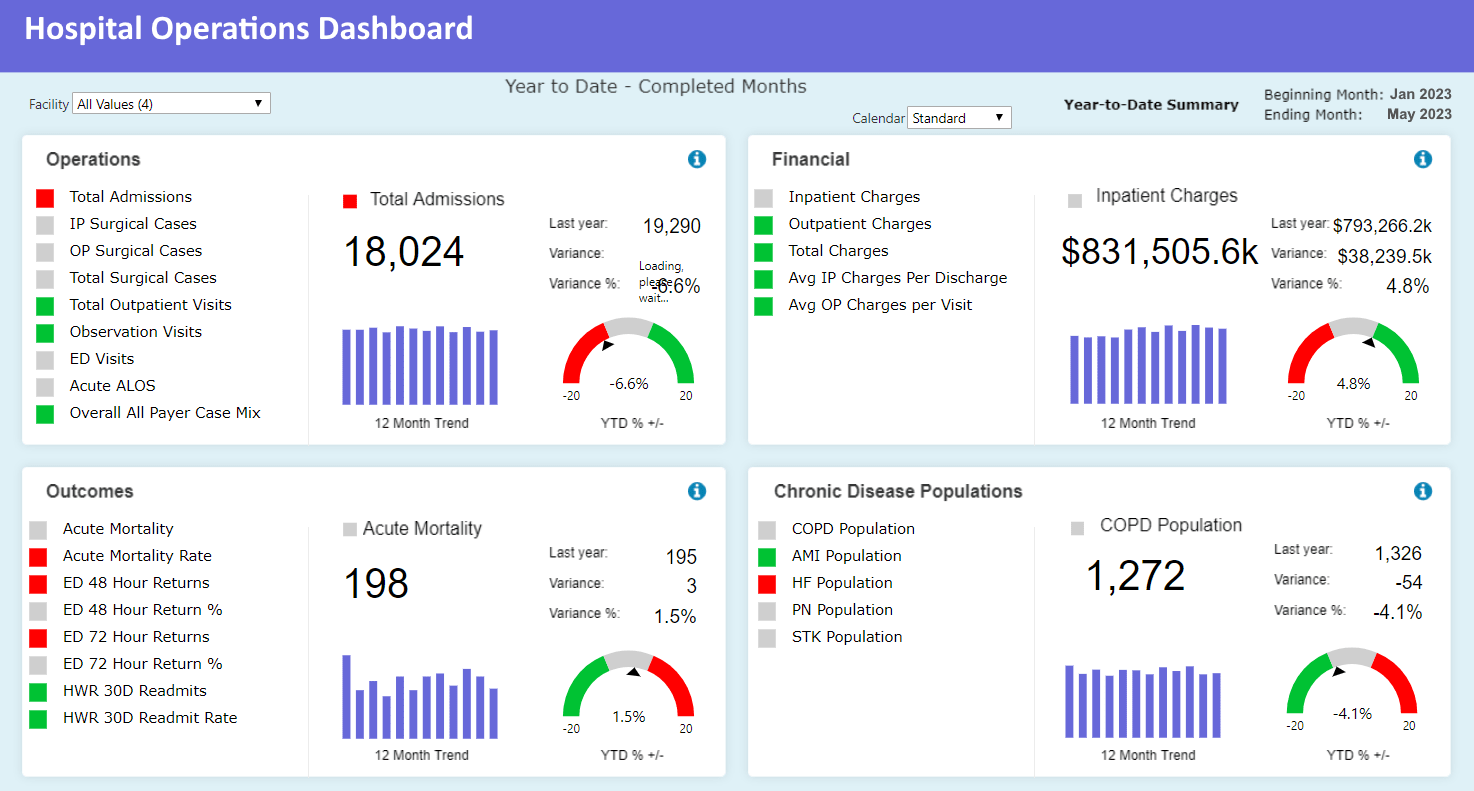
Electronic Health Records (EHR) and Hospital Information Systems (HIS) form the backbone of modern operational visibility. By capturing timestamped data at every patient touchpoint—from triage to discharge—administrators can track workflow bottlenecks instantly. This continuous data capture allows healthcare facilities to evaluate their medical technology integration status and determine how digital tools streamline daily clinical tasks.
1.1.3 The Difference Between Internal Historical Trending and External Peer Comparison
Understanding operational performance requires balancing two distinct lenses: internal historical trending and external peer comparison. Internal tracking measures a facility’s progress against its own past performance, highlighting seasonal variations or the impact of localized workflow changes. Conversely, external benchmarking contrasts institutional data against regional or national cohorts, providing the objective context needed to identify true competitive advantages and systemic inefficiencies.
1.2 Essential Operational Metrics and Performance Indicators
1.2.1 Patient Flow and Capacity Management Metrics Including LOS and Bed Occupancy
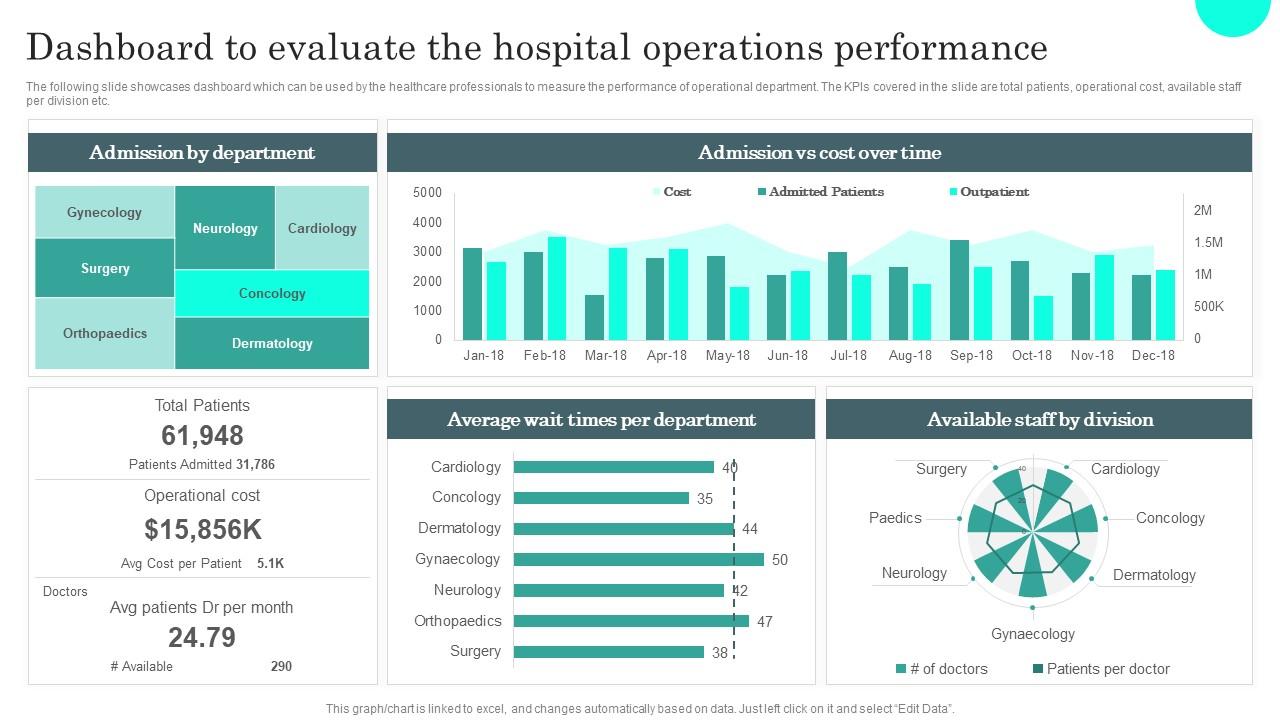
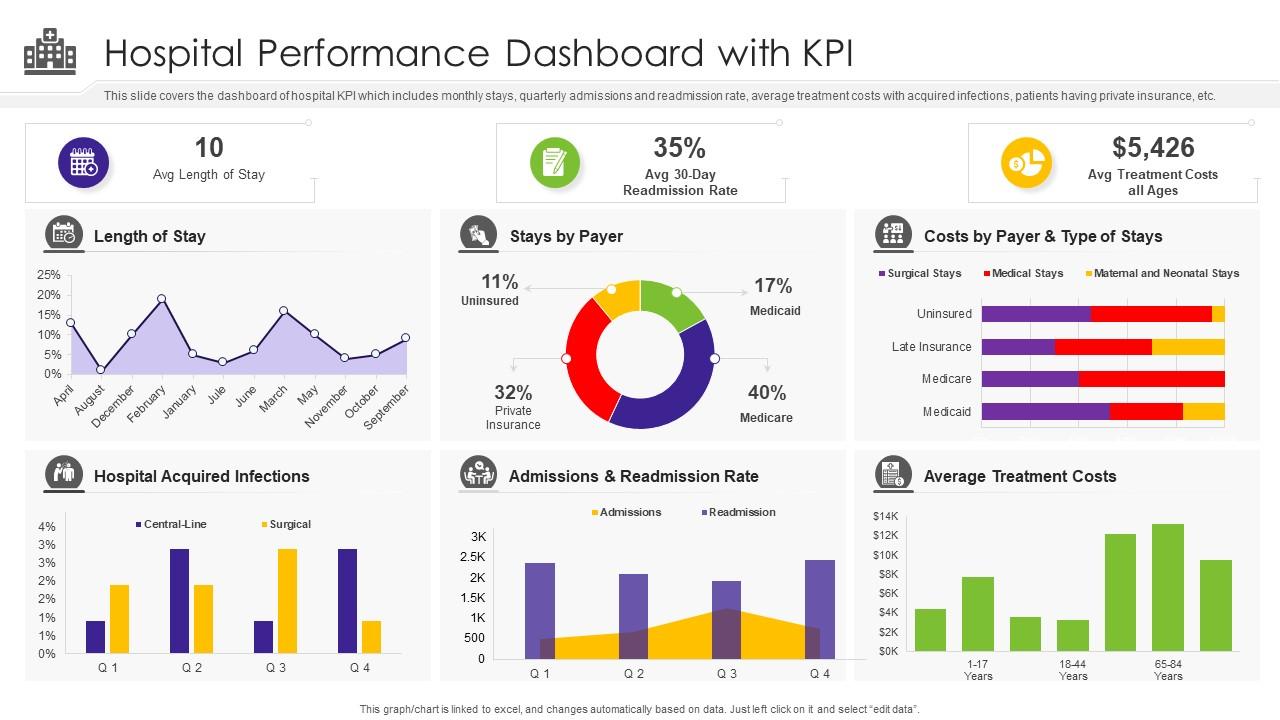
Capacity management directly dictates both financial viability and clinical safety. Key indicators such as Length of Stay (LOS) and bed occupancy rates reveal how efficiently a facility moves patients through the continuum of care. Excessively long stays strain physical resources and increase vulnerability to hospital-acquired conditions, making precise flow tracking paramount.
1.2.2 Access to Care Benchmarks for ED Throughput and Appointment Latency
Emergency Department (ED) throughput—measured through metrics like door-to-doctor time and left-without-being-seen rates—serves as an immediate stress test for a hospital’s operational framework. Similarly, outpatient appointment latency dictates ambulatory access, directly influencing patient retention and preventative care engagement across the community.
1.2.3 Workforce Optimization Metrics Focusing on FTE Per Bed and Labor Productivity
Labor typically represents the single largest operational expense for U.S. health systems. Evaluating Full-Time Equivalents (FTE) per adjusted occupied bed alongside labor hours per unit of service helps executive teams balance staffing adequacy with fiscal discipline, preventing both costly burnout and understaffing risks.
1.2.4 Asset and Resource Utilization KPIs for Surgical Suites and Supply Chains
High-demand environments require meticulous oversight of physical assets. When evaluating high-volume surgical centers comparison metrics, administrators focus heavily on block utilization, room turnover times, and first-case on-time starts. Concurrently, supply chain KPIs track inventory turnover and waste reduction to ensure clinical teams have uninterrupted access to necessary tools.
1.3 Harmonizing Operations with Quality and Financial Outcomes
1.3.1 Correlating Operational Speed with Patient Safety and HCAHPS Satisfaction Scores
True efficiency never compromises clinical standards. Hospital leaders must continuously evaluate clinical treatment outcomes alongside speed metrics to ensure that accelerated patient turnover does not result in readmissions or medical errors. Correlating operational throughput with Hospital Consumer Assessment of Healthcare Providers and Systems (HCAHPS) scores ensures that efficiency initiatives genuinely elevate the patient experience.
1.3.2 Analyzing the Financial Impact of Revenue Leakage and Cost Per Adjusted Discharge
Operational bottlenecks invariably manifest as financial drain. Tracking the Cost Per Adjusted Discharge (CPAD) alongside revenue leakage points—such as uncaptured charges, prolonged bed holds, and billing delays—allows finance departments to quantify the monetary value of streamlined workflows and secure long-term organizational sustainability.
2. Executing Data-Driven Hospital Operational Efficiency Benchmarking Programs
2.1 Establishing a Lifecycle for Continuous Improvement
2.1.1 Step-by-Step Methodology for Baseline Setting and Strategic Goal Alignment
Launching a successful operational benchmarking initiative requires a structured approach that begins with establishing an accurate baseline. Hospital administrators must first audit current performance metrics across all departments, isolating historical data to understand normal operating variances. This baseline serves as the foundation for strategic goal alignment, ensuring that internal productivity targets align with overarching organizational missions, such as reducing patient wait times or optimizing resource allocation without sacrificing safety standards.
2.1.2 Selecting Reliable Datasets from CMS, CDC, and Proprietary Benchmarking Organizations
Data credibility can make or break an improvement program. Healthcare facilities must leverage standardized, validated datasets sourced from federal agencies like the Centers for Medicare & Medicaid Services (CMS) and the Centers for Disease Control and Prevention (CDC). Combining these public health repositories with specialized proprietary benchmarking organizations allows hospitals to contextualize their performance against regional and national peers facing similar patient demographics and economic pressures.
2.1.3 Mitigating Data Silos through Standardized Reporting Protocols
Fragmented information systems often obstruct comprehensive performance tracking. When electronic health records, nursing station logs, and supply chain inventories operate in isolation, leadership teams receive skewed insights. Mitigating these barriers involves enforcing enterprise-wide standardized reporting protocols, ensuring that data points flow seamlessly into a centralized dashboard for real-time analysis and transparent cross-departmental review.
2.1.4 Root Cause Analysis Techniques for Identifying Operational Variance
Uncovering why a specific department deviates from established benchmarks demands rigorous diagnostic tools. Healthcare quality officers frequently rely on root cause analysis techniques—such as the “Five Whys” methodology and Ishikawa (fishbone) diagrams—to dissect bottlenecks in emergency triage, patient discharge processing, or surgical turnover times. Addressing the underlying systemic flaws prevents recurring inefficiencies rather than merely treating superficial symptoms.
2.1.5 Applying Lean Six Sigma and PDSA Cycles for Process Refinement
Sustainable operational refinement thrives on structured methodologies like Lean Six Sigma and Plan-Do-Study-Act (PDSA) cycles. By streamlining workflows to eliminate waste and continuously testing small-scale operational changes, clinical and administrative teams can systematically improve throughput. For instance, when evaluating a high-volume surgical centers comparison, facilities often apply these frameworks to minimize room turnover delays and maximize daily operating room utilization.
2.2 Navigating Barriers to Institutional Implementation
2.2.1 Adjusting for Patient Case-Mix Index and Clinical Acuity Complexities
Directly comparing raw operational numbers across different hospitals can be misleading due to varying patient populations. A facility treating highly complex trauma cases will naturally record longer lengths of stay than a community ambulatory center. Successful benchmarking demands rigorous risk-adjustment models that account for the Patient Case-Mix Index (CMI) and overall clinical acuity, ensuring fair and accurate performance evaluations.
2.2.2 Strategies for Overcoming Cultural Resistance to Performance Transparency
Introducing rigorous metrics often triggers skepticism among clinical staff who fear that efficiency initiatives prioritize financial savings over patient well-being. Overcoming this cultural resistance requires fostering an environment of psychological safety and shared governance. When leadership frames performance transparency as a tool to alleviate clinician burnout and improve patient access, teams are far more likely to embrace data-driven accountability.
2.2.3 Ensuring Data Integrity and Regulatory Compliance with HIPAA Standards
As hospitals aggregate and analyze vast streams of operational and clinical data, safeguarding patient privacy remains paramount. All benchmarking activities must strictly adhere to Health Insurance Portability and Accountability Act (HIPAA) regulations. De-identifying patient datasets, restricting access permissions, and maintaining robust audit trails protect sensitive health information while supporting organizational optimization goals.
2.3 The Future of Benchmarking in Healthcare
2.3.1 Integrating Predictive Analytics and Artificial Intelligence into Operational Workflows
The evolution of hospital administration is shifting from retrospective reporting to proactive foresight. Integrating predictive analytics and artificial intelligence into daily operations allows facility managers to anticipate bottlenecks before they happen, fundamentally transforming how health systems allocate staff, beds, and diagnostic equipment.
2.3.2 Utilizing Machine Learning to Forecast Capacity Demand and Staffing Requirements
Advanced machine learning models analyze historical admissions, local weather patterns, public health trends, and seasonal illness outbreaks to accurately forecast future hospital bed occupancy and emergency department surges. By leveraging these predictive insights, human resources can dynamically adjust nursing rosters, mitigating understaffing risks and preventing costly overtime expenditures.
2.3.3 Preparing for Value-Based Care Shifts Through Enhanced Benchmarking Capabilities
As the U.S. healthcare landscape transitions decisively toward value-based reimbursement models, traditional fee-for-service efficiency metrics are no longer sufficient. Advanced benchmarking programs now focus heavily on measuring clinical treatment outcomes alongside cost efficiency. Hospitals that master this dual focus will be exceptionally well-positioned to thrive under modern risk-sharing contracts and accountable care structures.
Navigating the complexities of hospital operational efficiency benchmarking requires a delicate balance between fiscal responsibility and uncompromising patient care. As U.S. healthcare systems face persistent economic pressures, rising patient acuity, and workforce constraints, establishing robust performance baselines is no longer optional—it is a survival strategy. By systematically tracking patient flow, optimizing workforce allocation, and refining resource utilization across departments, healthcare leaders can identify critical bottlenecks and eliminate wasteful redundancies without sacrificing the standard of care.
Ultimately, successful benchmarking transforms raw administrative data into actionable intelligence. When integrated with advanced predictive analytics and a culture of continuous institutional improvement, data-driven frameworks empower hospital executives to streamline workflows, enhance capacity management, and prepare effectively for value-based care models. To explore related strategies for evaluating care standards and facility performance, read more about medical excellence benchmarks to ensure your organization remains resilient, competitive, and patient-centered in a rapidly evolving medical landscape.
One Reply to “Hospital Operational Efficiency Benchmarking: Key Metrics”